Copy article URL
 Unsave article
 Save article
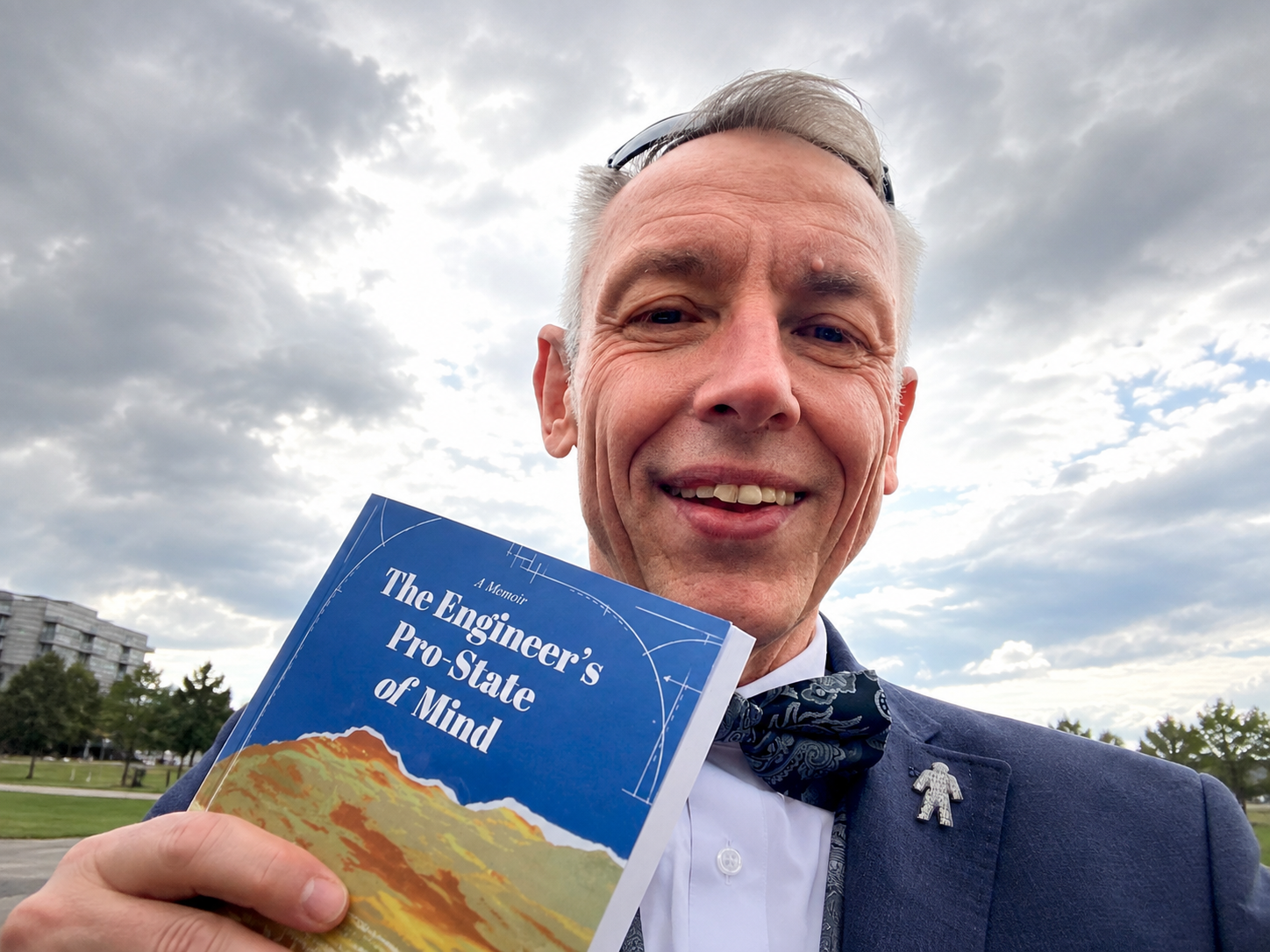
I’m Neil May, a Mechanical Design Engineer from Bishop’s Stortford, and like most engineers, I spent years believing that if something wasn’t rattling, leaking or sparking, it didn’t need attention.
That approach works perfectly for machinery. It works terribly for the prostate gland.
My story began with BPH – Benign Prostatic Hyperplasia, or an enlarged prostate. Irritating, yes. Life-changing, no. I was in my early 50s, still exercising, still working and still assuming I was indestructible.
Then my PSA started climbing. Fast.
Then came the words nobody wants to hear: Stage 2 localised prostate cancer.
I’m an engineer, so my instinct was to gather data – anything that made the problem feel solvable. But cancer isn’t a loose bolt or a misaligned bracket. It’s personal.
After considering the options, I chose a robotic radical prostatectomy. For me, removing the cancer completely felt like the most decisive path. I wanted it gone.
Fortunately, the cancer was caught early enough for nerve-sparing surgery. The operation went well. The recovery, however, was… character-building.
Incontinence
Yes, I had it. It was messy, frustrating and humbling. Pelvic-floor exercises quickly became part of daily life, and slowly things improved.
When I finally stopped wearing TENA for Men liners, it felt like being released from a secret club I never wanted to join – one where the membership card is padded and comes with disposal instructions.
Erectile dysfunction
Yes, that too. With the help of a prescribed vacuum pump and tadalafil (Cialis), things gradually improved. I just needed patience while various internal components recalibrated themselves – less biology, more waiting for a stubborn machine to restart.
Eventually things returned to normal, apart from the fact that orgasms are now dry. It’s odd at first, but you adapt. Intimacy continues, just differently.
These side effects are common, but men rarely talk about them. We should. They’re part of the journey, not a failure.
The impact on my partner
Cancer doesn’t just happen to the patient. It happens to the partner too.
My wife, Annette, had to absorb the shock while trying to stay strong for me. She supported me through incontinence and erectile dysfunction, both of which can affect confidence, intimacy and the emotional dynamic of a relationship.
She also had to adjust to the reality of dry orgasms – a change for both of us.
Partners often hide their fear, frustration and exhaustion because they don’t want to add to the patient’s burden. Looking back, I can see how much Annette held together. She didn’t need to fix anything. She just needed to be there. Thankfully, she was.
The strange twist
Long before my diagnosis, I had worked on engineering projects connected directly to prostate-cancer treatment.
I helped design equipment for producing alpha-pharmaceuticals, including systems used to manufacture radium-223 therapies for men with advanced prostate cancer. I also designed equipment used to manufacture brachytherapy seeds – tiny radioactive pellets implanted directly into the prostate.
I never imagined I would become one of the men whose lives were touched by that technology.
Even stranger, I designed washer-disinfectors for the robotic surgical equipment used in prostatectomies. I spent years designing systems that cleaned and disinfected the robotic arms and instruments used in the operating theatre.
I never imagined that one day I would be lying on an operating table while a robot, cleaned by equipment I had helped design, was being used to remove my prostate.
My career had somehow come full circle.
What I wish I’d known earlier
If I could go back and talk to myself at 45, I’d say:
“You’re not too young for prostate cancer. Get checked.”
I wish I’d known that BPH doesn’t mean you’re safe; a rising PSA deserves attention; feeling healthy doesn’t necessarily mean you are healthy; side effects after surgery can improve; and partners need support too.
Men often think they have to handle everything alone. We don’t. And we shouldn’t.
What the journey taught me
Cancer taught me that life isn’t a straight line. It’s a series of unexpected turns, some of which you’d never choose, but all of which shape you.
It taught me that humour helps, honesty is easier than pretending, vulnerability isn’t weakness and partners often carry a weight we overlook.
Most importantly, it taught me that men’s health needs real voices – not just leaflets and statistics, but lived experience. Stories make men book tests. Stories make families feel less alone.
That’s why I wrote my book. That’s why I speak for Prostate Cancer UK. And that’s why I’m sharing this here.
The full journey is in my memoir, The Engineer’s Pro-State of Mind:
https://www.dual2.co.uk/the-engineers-pro-state-of-mind/