Copy article URL
 Unsave article
 Save article
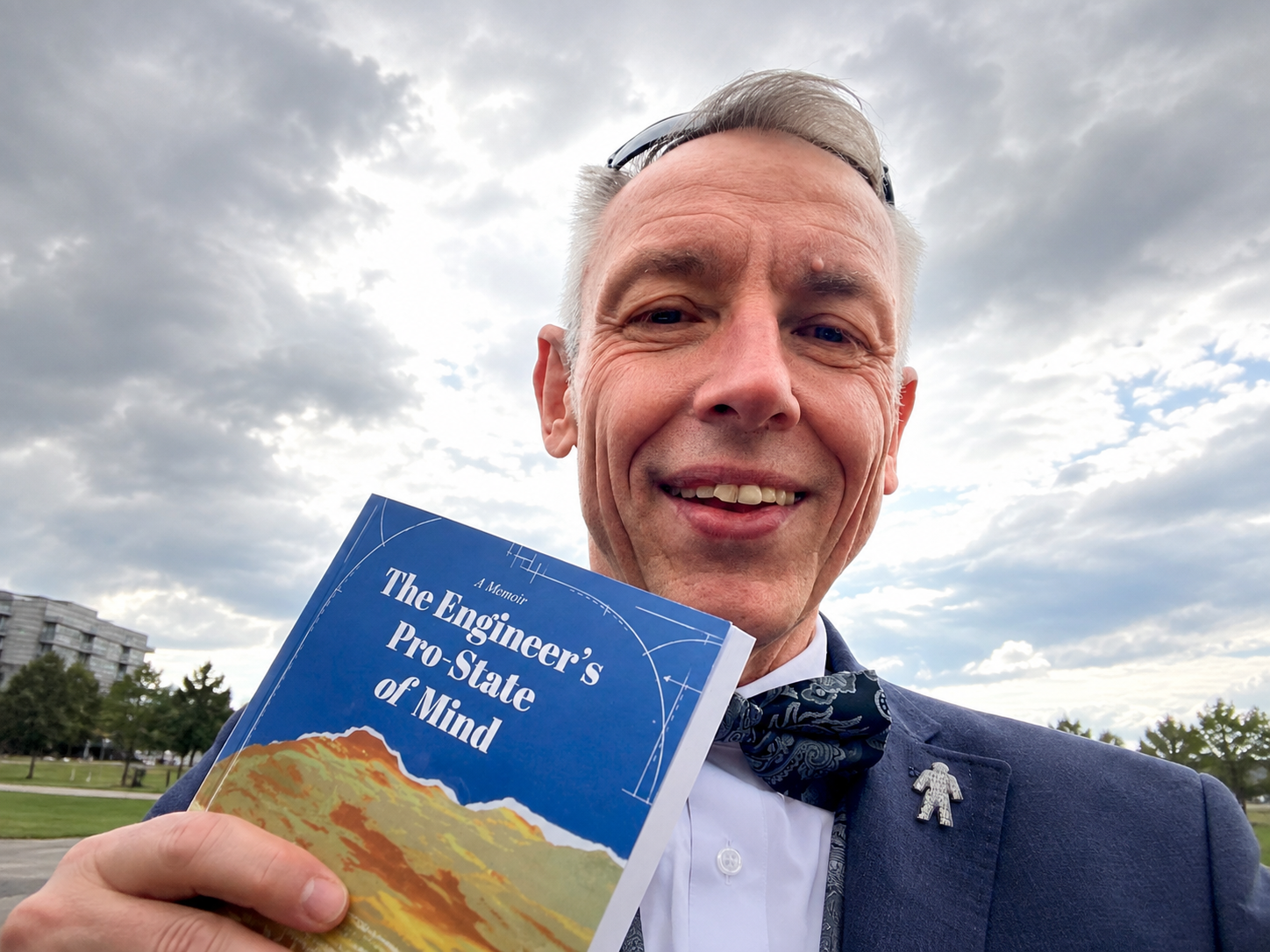
In order to both reassure current patients and encourage others to get tested, prostate cancer survivor, Neil May has diarised his experiences from diagnosis, through treatment, to a full and productive life afterwards. Being an engineer by profession, Neil takes a down-to-earth practical view which is nonetheless heartfelt and sensitive. He shares the good, the bad and the ugly with a stoic yet humorous approach. An extract from his book and a link to the full version are both below:
Chapter 12
Preparing for the Big Day
My operation would be performed at University College London Hospital.
Before anything could happen, I had to meet the surgical consultant and attend a pre-op seminar.
The consultation was straightforward enough. He went through my diagnosis again, discussed the side effects, and confirmed I understood what removing a walnut-sized gland would mean for the rest of my life.
No surprises there.
Possible incontinence. Erectile dysfunction. The chance of biochemical recurrence, which means some cancer cells might be left behind and show up in future PSA tests.
But there was a backup plan for recurrence, involving radiotherapy and hormone treatment. Not ideal, but better than nothing.
He also confirmed I would be having nerve-sparing surgery. That was a relief.
The nerves responsible for erections run along the outside of the prostate like delicate electrical wiring. If they can be preserved, sexual function has a fighting chance. If they cannot, things become more complicated.
The consultant explained it calmly, but I could tell he was confident. My cancer looked localised. The nerves were worth saving.
He studied my MRI scans and pointed out the areas of cancer. He said it looked contained within the prostate and that a few blasts of radiotherapy would sort it out.
That was when I had to gently correct him.
“If radiotherapy fails, I cannot have a radical prostatectomy,” I said. “But if the prostatectomy fails, I can still have radiotherapy.”
He paused, looked at me, and nodded.
He could see I had done my research and knew exactly what I wanted.
I was not leaving that gland in my body a moment longer than necessary.
The Pre-Op Seminar
Next stop was the seminar.
A presentation covering everything from admission to recovery. A room full of men and their partners, all preparing to say goodbye to their prostate.
In my case, it was more of a good riddance.
One of the top robotic surgeons at the hospital led the session. He began with a sentence I will never forget.
“Thank you for attending. I am going to explain how this operation changes your male urological internal anatomy to a female one.”
I had never thought about it like that before, but he was right.
Once the prostate is removed, the male plumbing system loses its built-in valve. The only thing holding back a full bladder is the pelvic floor muscles.
And men, being men, tend not to use those muscles much because the prostate has always done the heavy lifting.
Learning to Use the Pelvic Floor
A nurse started presenting and explained pelvic floor exercises.
“Imagine you are in an elevator with other people,” she said. “You feel the urge to break wind but want to hold it back. That is the action. That is a pelvic floor contraction.”
Simple enough.
Clench like you are trying not to embarrass yourself in public.
She then explained the reps and sets. Fast clench and release. Slow clench, hold, then slow release. Repeat.
And to make it easier, she directed us to an NHS app called Squeezy Men.
You can set alarms, track your reps, and follow a timer.
A personal trainer for your undercarriage.
The Robotic Surgery
They showed us some of the surgical equipment.
Laparoscopic cutters and pliers that attach to the robot arms. Five of them would be inserted into the abdomen once the body was tilted at an angle, head-down, and inflated with carbon dioxide.
All this creates space within the area of interest.
The surgeon would sit at a console, looking at a screen that replicates a three-dimensional view, and operate the robot with finger controls.
It would be as if the surgeon were inside the body.
Robotic surgery sounded futuristic, but the surgeon made one thing very clear:
“It is robotic, but I am the one operating it.”
The advantage was precision.
No shaking. No slips.
Perfect for navigating tiny blood vessels, nerve pathways and lymph nodes.
Exactly what you want when someone is working in an area that controls continence, erections, and everything else that makes life comfortable.
The Less Glamorous Details
Next came the less glamorous parts.
Nutrition.
General anaesthetic.
Constipation.
Wind that could power a small turbine.
The possibility of a drain tube coming out of one of the abdominal entry points.
And, of course, the catheter.
A catheter would be fitted for ten to fourteen days to allow the bladder and urethra to heal.
I had already done my apprenticeship in catheter management, so that part did not worry me.
There was also a discussion about sperm freezing.
Every man having this operation is effectively having a vasectomy at the same time.
A few men shifted awkwardly in their seats.
The Question Everyone Was Thinking About
Then came the question-and-answer session.
A woman raised her hand.
“What about ejaculation?” she asked.
The surgeon replied:
“To put it bluntly, there is no semen ejaculated. The prostate produces it. But dry orgasms can still be experienced.”
You could feel the entire room mentally adjusting to this new information.
He explained that although MRI and biopsies give a good idea of the cancer’s extent, the true picture only becomes clear during surgery.
They test areas around the prostate bed for cancer cells, including lymph nodes and nerves.
The Practical Stuff
The Macmillan team were there too.
They talked about finances, sick pay, what to tell mortgage and insurance companies, support groups, and how to apply for medical exemption from prescription charges.
The only thing missing from the seminar was a buffet.
But considering the operation probably cost around twenty to thirty thousand pounds, I suppose sandwiches would have been pushing it.
The Partners
What struck me most at the seminar was not the number of men, although there were plenty, but the partners.
Wives, girlfriends, long-term companions who had been pulled into this journey whether they liked it or not.
Some looked anxious.
Some looked determined.
Some looked like they had already read every leaflet and were preparing a list of questions that could fill a whiteboard.
The men were a mixed bunch.
Some quiet.
Some trying to look unfazed.
Some with that stunned expression you get when you have been given too much information too quickly.
But the partners were the ones really listening.
They took notes.
They asked the questions we did not.
They wanted clarity on recovery, continence, erections, radiotherapy and timelines.
All the things we pretended we were not worried about.
And it hit me.
This was not only happening to me.
It was happening to the person next to me too.
They were dealing with the same fear and uncertainty, but without the ability to do anything practical about it.
We Were All in This Together
There was a strange sense of unity in the room.
Not because we were all the same.
We were not.
Some would have nerve-sparing surgery like me. Some would not.
Some might need radiotherapy afterwards. Some hopefully would not.
But we were all heading into the same operation, on roughly the same timeline, with roughly the same questions hanging over us.
No one said it out loud, but you could feel it.
We were all stepping into this together.
Men and partners.
Different roles.
Same journey.
And somehow, that made the whole thing feel a little less isolating.
Not easier.
Not lighter.
Shared.
My New Lifelong Companion
And then came the final reminder.
The PSA test.
My new lifelong companion.
The PSA would be the go-to test for detecting any recurrence.
Every three months for the first year.
Then every six months for ten years.
A long stretch of squeaky-bum time, waiting for the numbers to come back.
Hoping for zeros.
Hoping for stability.
And the relief when the PSA is undetectable is overwhelming.
It feels like someone has lifted a weight off your chest that you did not realise you were carrying every day.
Ready for the Big Day
By the end of the seminar, I felt strangely calmer.
Not because the operation sounded easy.
It didn’t.
But because I knew what was coming.
I understood the plan. I understood the risks.
And I knew I was ready to get this cancer out of my body and get on with my life....
© 2026 Dual2 Ltd. All rights reserved.